
Searching the Kite Court Docket
Kite publishes no municipal-court search portal. So skip the guesswork with vendor sites. Start with the paper: the citation, summons, or notice names the issuing court and its case number. From there, contact Kite City Hall to confirm which court or clerk handles the matter. A case marked Johnson Superior takes a different route. Use Georgia Courts E-Access, pick Johnson Superior, and follow its PeachCourt link. Keep this in mind. The county service does not prove access to a Kite municipal docket.
- Copy the court name, issuer, citation or case number, and court date exactly as printed.
- Call Kite City Hall when the notice identifies Kite or gives no clear court contact.
- Use only the lookup or payment service named by the citation, court, or city.
- For a Johnson Superior case, follow the official E-Access row to PeachCourt.
- Confirm the date, place, status, and appearance terms with the responsible clerk.
Search by the full case number when you can, since one wrong letter in a name can pull the wrong Johnson County docket entry.
Keep any confirmation number. Do not read a vendor failure, an empty search, or a disabled pay button as a dismissal.
Kite Court Records Start at City Hall
For Kite court records, City Hall is the place to begin. The Georgia Municipal Association gives its address as 1112 Railroad Street, Kite, GA 31049. Call (478) 469-3866 or fax (478) 469-3344. Listed weekday hours run 8:00 a.m. to noon. That short window makes a phone call smart before you drive over. When you reach the office, ask which department holds the record you were cited for. Ask whether a court session is on the calendar. Ask whether the city has approved any online service for looking up a case, too.
Kite City Hall
1112 Railroad Street
Kite, GA 31049
(478) 469-3866
Weekdays, 8:00 a.m. to noon
Fax: (478) 469-3344
The GMA Kite profile provides a visual check of the public city directory.
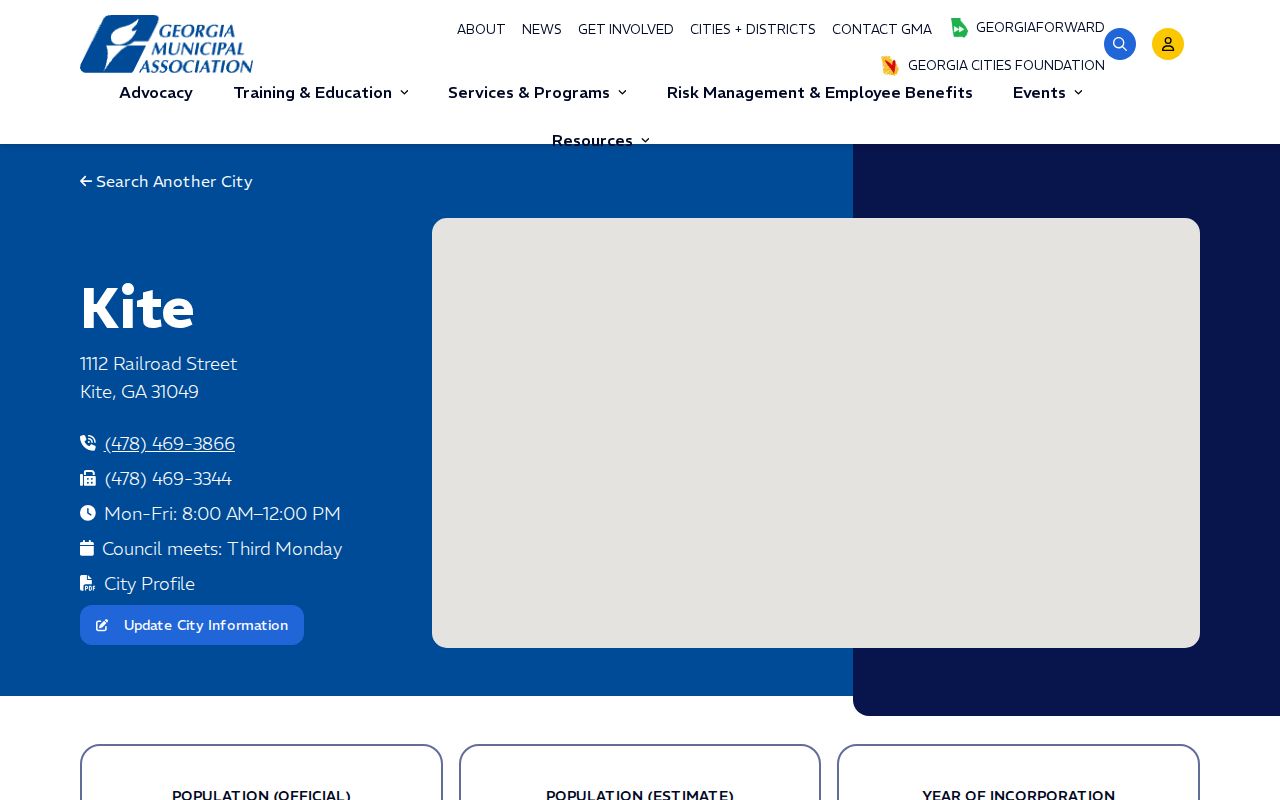
That route leads back to City Hall itself, which offers no municipal judge listing, no docket calendar, and no case-search tool.
Kite Municipal Court Basics
Georgia municipal courts typically handle city ordinance violations plus the traffic matters assigned to them. Kite itself publishes no named municipal judge. It posts no set docket day and no online municipal case system. That absence does not mean the city has no municipal court. Confusing the two claims leads people astray, though. The court printed on your actual citation or notice is still the best evidence of where the case belongs.
A city name on a ticket tells you where something happened. It does not tell you which office holds the record. A state-issued citation, a county matter, and a city ordinance case can each travel a different path. So ask whether the issuing agency passed the citation to a court. Ask whether a clerk can pull it up by case number. Ask whether the appearance date still stands, too. If City Hall points you to another office, write down that office's name and number.
No Published Kite Docket Portal
Kite publishes no docket portal of its own, and that gap actually protects you. It keeps a docket search from drifting into some unrelated county database or payment processor. Georgia Courts' locate or pay guidance works the other way: it sends you by city, county, or the court that issued the ticket. The state keeps no single database covering every traffic citation in Georgia. When a provider comes up empty, the advice is simple. Call the issuing court directly.
Portal boundary: Kite offers no municipal docket search, ticket-payment page, municipal judge page, or court calendar online. Confirm the right route with City Hall.
Online results often trail the paper ticket. A citation can take 7 to 21 business days to show up through a supported solution, per Georgia's own guidance. Then a non-match still does not mean much. It may point to the wrong issuer, a data-entry difference, or a court that simply does not use the vendor you picked.
Court Dates and Settings in Kite
Kite posts no official court calendar. Start with the date printed on your citation or notice. Then confirm it with the named court or City Hall before you plan around it. Dates move: a continuance, a closure, or a later order can reset a hearing. One more caution. The docket may show a setting while the full notice carries the real appearance instructions. Ask whether you must appear in person. Ask which location governs. Ask whether a newer notice replaced the old one, too.
| Date | The setting date shown on the current notice or court record. |
|---|---|
| Time | The stated start time, which may be a shared docket call. |
| Location | The building or room confirmed by the court; do not infer City Hall is the courtroom. |
| Court | The named municipal, Probate, Magistrate, Superior, or other court. |
| Setting Type | The court’s label, such as hearing, trial, or compliance setting. |
| Status | Scheduled, reset, continued, canceled, or held, subject to confirmation. |
A reset only sets a new court date. It is not a ruling, and it does not mean the case ended. If a date has passed or the notice clashes with a portal, call the court right away. A clerk can confirm the docket entry. Only a court or a lawyer can give case advice, though.
Kite Docket Access at Small Scale
Kite is tiny. The 2020 Census table counted 160 residents. It classified the town as rural, making it the smaller of Johnson County's two incorporated places. At that scale, calling the court directly may work better than expecting a large digital docket system. Note the limited City Hall hours. One caution: that 160 is labeled with its census year for a reason. It is not a current caseload count. It reveals nothing about how many matters the court handles.
The official incorporated-place table supplies the common vintage. Population gives access context, not jurisdiction, so the citation and court name still control the route to any Kite court docket.
Traffic Tickets in Kite
Work from the paper ticket itself. Note the issuing agency. Note the court it names, the citation number, the violation date, the court date, and any instruction to appear. Statewide guidance sometimes points to a payment provider when the issuing court takes part. Kite is not tied to any specific vendor, though. So pay only through a provider printed on the citation or confirmed by the city. A provider that serves another Johnson County court is not automatically authorized for Kite.
Paying is not a harmless lookup. Georgia.gov's ticket guidance makes clear that paying a payable citation before court usually counts as a guilty plea. Some citations still require an appearance. Anyone who wants to contest the ticket should contact the court. The same goes for someone who cannot find it. Missed the date? Contact the court too. For the fuller county picture, see Johnson County traffic tickets.
Note: A receipt proves a payment was submitted; it does not replace the docket or a certified disposition.
Kite Court Records in Local Context
Kite incorporated in 1891, per the GMA directory. Georgia planning material describes a railroad town from the early 1890s along the Wadley and Mount Vernon line, near the Little Ohoopee River and routes now tied to U.S. 221 and Georgia 57. That past explains why a compact city office still serves as the practical civic contact. It says nothing about modern court jurisdiction, filing practice, or a public docket.
County records live elsewhere, with a different custodian. The Digital Library of Georgia courthouse record shows the historic Johnson County courthouse and its ties to county court business.
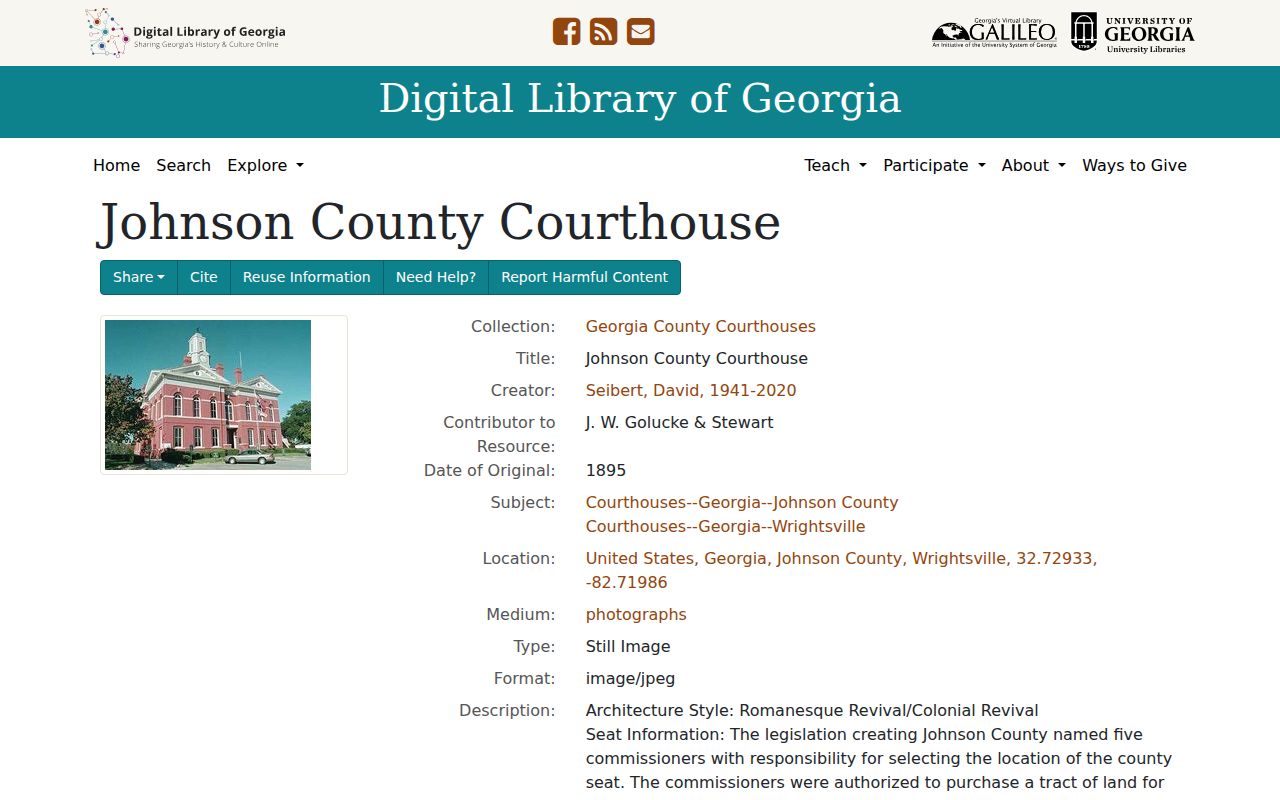
Local color is not a routing map. One old courthouse photo should not send every Kite inquiry to Superior Court. Municipal, Magistrate, Probate, and Superior records each stay with their own custodians.
Where Kite Cases Go
A Kite municipal matter stays on the city court or clerical route once the issuer confirms it. County-level filings go to whichever court has authority over that case type. Superior Court takes broad civil matters and felony trials. Magistrate Court handles warrants, preliminary matters, county ordinance matters, and limited civil claims. Probate Court keeps estates, guardianships, and its assigned records. Juvenile files follow the Dublin Judicial Circuit route. They carry special access limits.
Docket flow: Kite Municipal Court › Johnson County Courts › Superior Court of Johnson County
Treat that structure as a routing aid only. It does not mean a case moves through all three levels. Read the caption for the actual court. A Johnson Superior case can be searched through PeachCourt after using official E-Access. Magistrate and Probate inquiries start with those offices. Federal matters go through the Southern District of Georgia Dublin Division. The Johnson County court docket rounds out the county overview.
Kite Dockets and County Indexes
A public records search can land on the wrong index. GSCCCA offers real estate, liens, plats, UCC filings, notaries, and court eCertification for participating courts. Those records may fit a wider inquiry. They cannot stand in for a Kite municipal docket, though. Search by record type and custodian, not just by a local name. The GSCCCA search page shows the boundary plainly, with separate record categories.
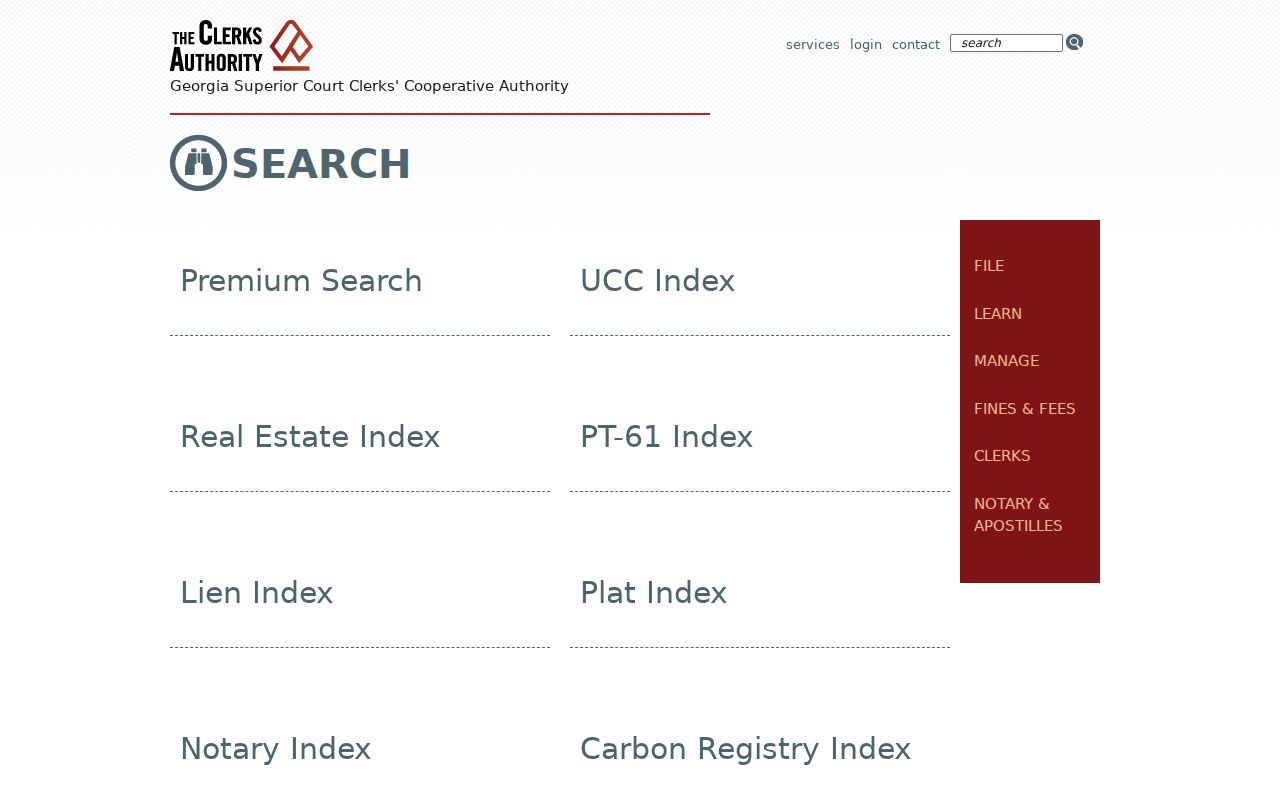
Johnson County Magistrate and Superior take part in GSCCCA eCertification. That does not mean every docket entry or Kite citation shows up there. Ask the court directly whether the item you need can be certified through the service.
A Kite Citation Controls the Route
A citation beats a broad web search. It names the issuer and usually the court. Copy the number exactly, keeping letters, dashes, and leading zeroes. Jot down the violation date and the scheduled date too. If the ticket carries an electronic-citation marker or lists a state agency, follow that agency and court route. Do not assume Kite started the case.
- Issuer
- The city, county, or state agency that wrote the citation.
- Citation number
- The ticket identifier used by the court or approved provider.
- Appearance required
- An instruction to attend court instead of resolving the matter by ordinary pre-court payment.
- Disposition
- The result entered by the court, separate from a transaction receipt.
If City Hall cannot find the number, check its spelling first. Then ask whether the issuer sends matters to another court. Never send private identifiers to an unverified service. An approved provider may require a date of birth. But it belongs nowhere in a public example.
Kite Court Record Access Rules
Georgia law starts from public access and then applies limits set by statute, rule, and court order. For a Kite municipal record, send a narrow request to the responsible clerk. City Hall confirms the custodian first. Name the existing record sought. Give the case or citation number. Then state whether you want inspection, an ordinary copy, or a certified copy. A clerk does not have to build a new report or offer legal analysis.
Key Rules:
Georgia Open Records Act guidance explains custodian choice, written requests, and lawful production costs.
O.C.G.A. § 50-18-71 sets the response framework and allows lawful search, redaction, copying, and production fees.
Uniform Superior Court Rule 21 states the Superior Court access baseline and process for limiting access.
Municipal access rules and the Superior Court rule differ, but both reward careful routing. Sealed material, juvenile records, adoption files, protected identifiers, and other confidential content may be withheld or redacted. When access is denied, ask which authority supports the limit and what public metadata remains available.