
Searching Johnson County Civil Dockets
For Superior civil files, open the Georgia Courts E-Access directory and pick Johnson Superior. Its PeachCourt link follows from there. The state page says an account is required. Registration is free for attorneys and non-attorneys alike. A file-stamped image can still carry a page charge plus a convenience fee. Treat the provider as a window into the clerk's record, not the custodian.
If a notice gave you the full case number, use it. One official county publication shows 2023-CV-0125 as an example. That does not prove every Johnson County civil series shares its punctuation or padding. Without a number, search the permitted party fields. Narrow by county, court, case type, date, or status.
- Identify Superior, Magistrate, or Probate Court from the caption or notice.
- For Superior Court, enter through Georgia E-Access and sign in to PeachCourt.
- Search the exact case number first, then use allowed party fields if needed.
- Compare court, case type, filed date, judge, status, and latest event before opening the record.
- Review Events and Hearings separately, then request an official copy from the clerk when needed.
Johnson County Civil Courts Differ
Civil matters do not all sit on one Johnson County docket. Superior Court takes broad civil jurisdiction. It also holds exclusive categories like divorce, title to land, and equity. Magistrate Court covers civil claims up to Georgia's $15,000 limit. It also handles limited matters such as dispossessory cases. Probate Court holds estates, wills, guardianships, and related records. The official court-class table lists no Johnson State Court.
| Court | Civil Work | First Contact |
|---|---|---|
| Superior Court | General civil, domestic relations, land title, equity | PeachCourt or Clerk at (478) 864-3484 |
| Magistrate Court | Claims up to $15,000 and limited civil matters | (478) 864-3316; civil questions also listed at (478) 864-3484 |
| Probate Court | Estates, wills, and guardianships | (478) 864-3316 |
An empty Superior search does not rule out a Magistrate or Probate matter. Read the caption and send the request to the court that created the case.
Inside a Johnson County Civil Docket
Think of a civil docket as the index of case activity. It can point to a complaint, service return, answer, motion, hearing, order, judgment, or appeal. It does not hold the full text. Dates carry distinct meanings too. A filing date may differ from the signature date, the service date, or the day the clerk entered the event.
| Case Number | The exact local identifier, including year, letters, hyphens, and zeroes. |
|---|---|
| Case Type | The provider's civil, domestic, land, equity, probate, or Magistrate label. |
| Parties | Roles such as plaintiff, defendant, petitioner, or respondent, plus counsel fields. |
| Events | Filed documents, service, notices, motions, comments, orders, and image links. |
| Hearings | Date, time, type, judge, place, and result when the system supplies them. |
| Disposition | Judgment, dismissal, transfer, appeal, or another result shown by an operative entry. |
A search-result badge alone cannot prove finality. Read the event chronology and the latest entered order.
Johnson County Filing to Final Order
Civil case activity usually starts with a complaint, petition, or application. From there the docket may record summons, service, an answer, a counterclaim, motions, responses, discovery notices, a scheduling order, mediation activity, hearing notices, and trial settings. Later entries can include a proposed order, an entered order, judgment, dismissal, appeal, garnishment, satisfaction, or a post-judgment motion.
Civil docket flow: Filing › Service › Response › Motions and Settings › Entered Order › Judgment or Other Disposition
Labels matter. A proposed order is a party's submission, not proof the judge signed it. A settlement notice may come before the final dismissal or consent judgment. A motion is only a request. An entered order records the court's action. Follow each event to its linked public document where available. Ask the clerk about any image that is absent, sealed, or unclear.
Civil Case Types on the Docket
Civil records in Johnson County reflect both the dispute and the court's jurisdiction. Superior Court is the main route for general civil cases and holds the exclusive categories under Georgia's court structure. Lower-court civil files stay with their own offices.
- General claims involving contracts, debt, injury, or other civil relief within the court's jurisdiction.
- Domestic-relations matters assigned to Superior Court, subject to privacy limits on some filings.
- Title-to-land and equity matters reserved to Superior Court.
- Magistrate claims within the statewide $15,000 limit, including some dispossessory proceedings.
- Probate cases involving estates, wills, and guardianships.
A real-estate or lien index at GSCCCA is not automatically the civil court docket. Know what you actually need. Is it a deed index, a filed lawsuit, a judgment, or a certified court document?
Johnson County Published Case Documents
Johnson County's December 2024 fire-fee refund notice is a local example of public document routing. The county page gives the case number 2023-CV-0125. It also links to official court PDFs. It can help a reader recognize a case number, an order, and a public notice. It does not turn the county document library into a full docket system.
The example also separates a public copy from the clerk's authoritative file. A county news page may gather selected documents for a public matter. It does not promise the full event chronology. It does not promise later filings, current hearing status, or a certified copy either. For the event history, search the Johnson Superior docket. For the original record, contact Patricia Glover.
Names from public filings are not needed to explain the workflow. Case metadata, court, dates, and document titles are enough. So is entered status. They separate a docket line from the PDF behind it.
Civil Docket Settings and Hearings
What will you see on a Johnson County civil docket? Motion hearings, status conferences, and pretrial conferences show up as entries. So do bench and jury trials and final hearings. Some deadlines live only in a scheduling order. They never reach the annual consolidated calendar. Check Events and Hearings both. Then open the actual notice or order for the time, the place, and how you must appear.
Treat any calendar as a guide, not gospel. The Dublin Judicial Circuit itself describes its consolidated calendars that way. For Johnson Superior, confirm the setting with the clerk at (478) 864-3484. Ask if the date is still current. Ask if the judge or room changed, and whether you appear in person or remotely. A continuance simply moves the setting; it decides nothing. A canceled event may reappear later with a new date in a fresh notice.
And a setting is never a judgment. After the hearing, watch the docket for a minute entry, an order, or some other result. For deeper detail on calendar checks, see the full Johnson County court dates resource.
Johnson County Civil Copies and Fees
Original Superior civil filings sit with Patricia Glover. Visit the office at 2557 East Elm Street, Wrightsville, Georgia 31096, or mail P.O. Box 269. Reach the office at (478) 864-3484; the fax is (478) 864-1343. Listed weekday hours run 8:00 a.m. to 5:00 p.m. The directory suggests calling rather than emailing.
Be precise about what you ask for. The docket index, a named filing, the full public case file, and a certified copy are four different products with different costs. PeachCourt charges $0.50 per page for file-stamped images plus a small convenience fee, but that vendor price is not a Johnson County certification fee. Johnson Superior posts no official copy or certification schedule. Call the clerk for the current amount, accepted payment, any search charge, mailing cost, and where the file lives.
GSCCCA eCertification is another route. It lists Johnson Superior and Magistrate as participating courts. Expect an account, a county and document type selection, clerk processing, a later payment authorization, and delivery of a secured PDF with an authentication link.
Civil Docket Access Rules
Public access is the default. Yet a Johnson County civil file can hold sealed, redacted, or protected material. Domestic, juvenile, adoption, and medical content may not read like an ordinary public filing. The same goes for financial and personal-identifier material. Electronic material stays unavailable until the clerk accepts the filing. A receipt from the e-file provider proves nothing about acceptance.
Key rules:
Georgia Code § 15-6-60.1 identifies the Superior Court Clerk as custodian of original filed records.
Georgia Code § 50-18-71 governs open-records responses, lawful costs, electronic production, and withholding notices.
Georgia Code § 15-6-11 addresses e-filing receipt, clerk acceptance, and courthouse terminal access.
The Georgia Attorney General's open-records guidance walks through how to direct a request to the record holder.
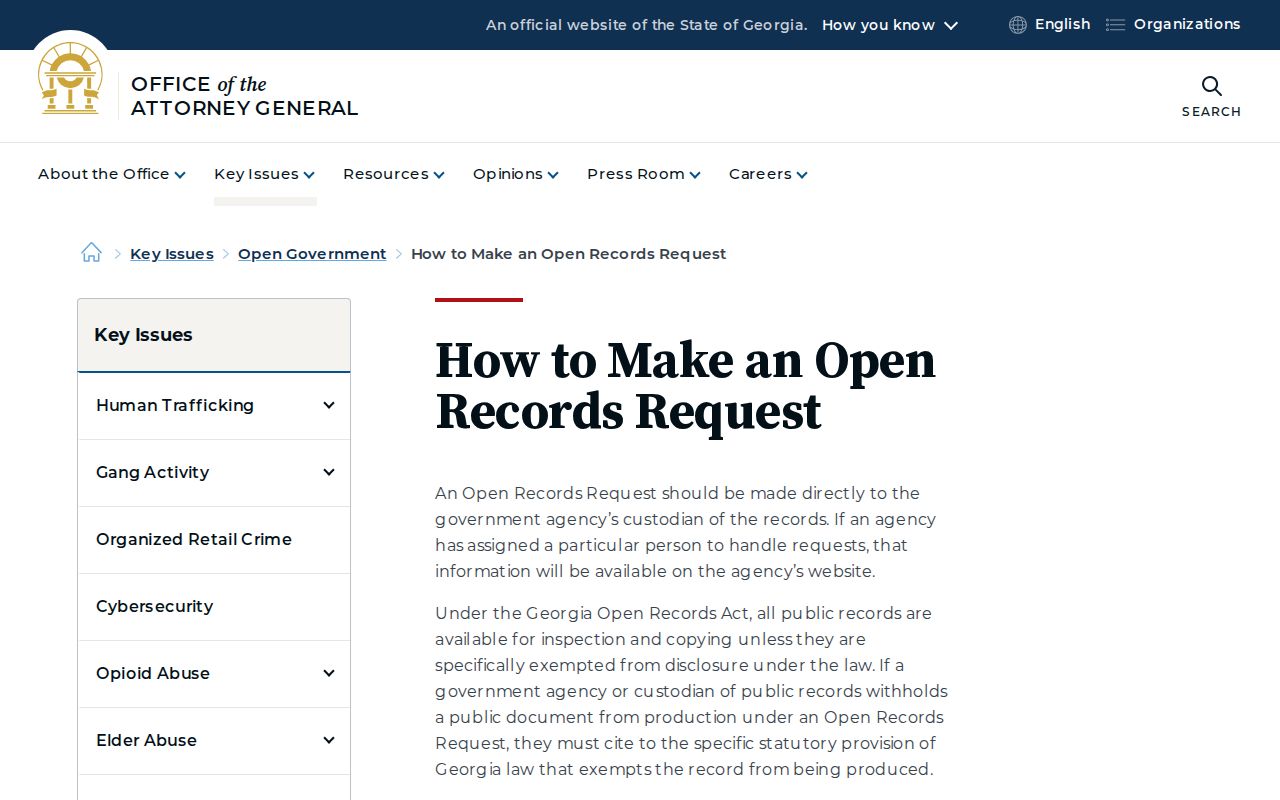
That guidance offers a written fallback when an online civil docket comes up short. Even so, original Superior Court requests still belong with the Superior clerk.
When Johnson County Search Fails
When a Johnson County civil case will not appear, several explanations fit. It may sit in the wrong court. The number may carry different punctuation. The case may fall outside the provider's online range, await acceptance, be restricted, or live as a lower-court record. Retry the exact case number from the notice, and confirm Johnson rather than another Dublin Circuit county. Keep broad case status separate from the latest event.
Still nothing? Call the responsible office. Ask to inspect the file at the clerk's counter or a courthouse public terminal. A mail or fax request can spell out the court, case number, document title or date, and date range. It should also state the copy or inspection choice, certification need, and delivery method. Georgia's Open Records Act permits a request to the custodian. The clerk may supply a cost estimate covering search, retrieval, redaction, copies, or delivery.
Note: a portal non-match is not a dismissal. It does not prove a Johnson County civil case was sealed or never filed, and it does not prove dismissal either. In short, it proves nothing.